Summary:Heavy ponytail extensions usually result from high placement or excess weight for your hair type. Fix it by lowering the ponytail, using silicone elastics, and choosing shorter lengths. Bobby pins or a base bun can improve security and comfort.
Key Takeaways
- Lower placement: Position your ponytail at the nape for better weight distribution.
- Use silicone elastics: They grip securely without excessive tension.
- Match weight to hair type: Choose extensions under 100g (approx. 3.5 oz) for fine or thin hair.
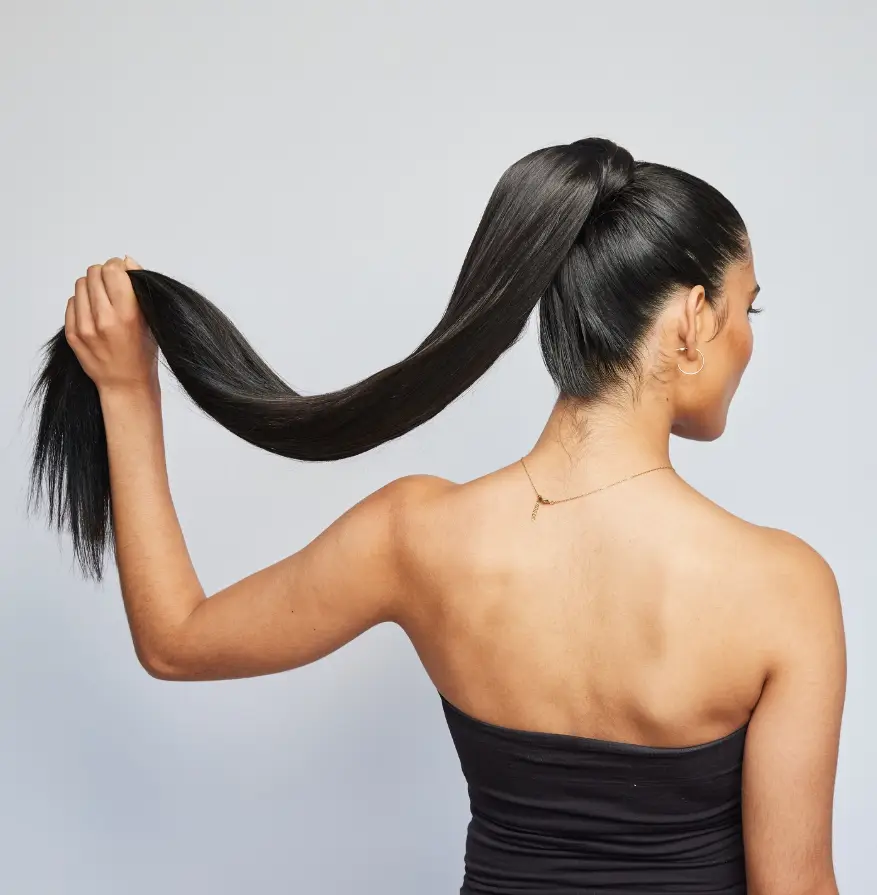
Why Does My Ponytail Hair Feel Heavy?
Direct Answer: A ponytail feels heavy because of improper placement—typically too high on the crown—or because the extension’s weight exceeds what your natural hair density can comfortably support.
1. Installation Issues
Placement is too high. When a ponytail extension is placed high on the crown, the entire weight concentrates on a small area of the scalp, creating tension.
2. Hair Type Mismatch
If you have fine or thin natural hair, a dense, 24-inch extension may simply be too much weight for your roots to support comfortably. The mismatch between the extension’s bulk and your hair’s natural density is a primary cause of discomfort.
How Can I Make My Ponytail Extension Feel Lighter?
Direct Answer: Lower the placement to the nape of your neck, switch to a silicone-lined elastic, and choose an extension length and weight appropriate for your hair density.
- Lower the placement: Wear the ponytail at the mid-level or nape (the base of the neck) to distribute weight more evenly.
- Swap your elastic: Use a soft, silicone-lined elastic. It grips securely without needing to be painfully tight.
- Skip the teasing: Avoid backcombing or roughening your natural hair before application; this reduces bulk and allows the extension to sit flatter against your head.
- Trim the length: If you have fine hair, consider shortening an overly long 24-inch extension to 20 or 18 inches to significantly reduce the overall weight.
- Check the base weight: For fine hair, look for extensions weighing less than 100 grams (approximately 3.5 ounces) to ensure all-day comfort.

Secure Methods for Better Hold
If your ponytail feels heavy and loose, the issue isn’t just weight—it’s security. Here are three professional techniques to ensure your extension stays put without overtightening.
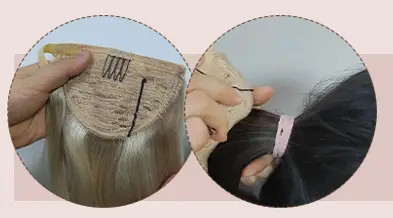
The Pin Method
How-to: Insert a bobby pin through the lace base, catching both the elastic band and your natural hair.
Why it works: This acts as an anchor, locking the extension in place and preventing it from dragging downward.
The Bun Method
How-to: Style your natural hair into a low, flat bun. Secure the ponytail extension over the bun using its comb or elastic.
Why it works: The bun acts as a stable shelf—a supportive foundation—that alleviates discomfort caused by the weight of the ponytail.
The Hybrid Method (Volume Boost)
How-to: For very fine hair, install one or two clip-in hair extensions on the top of your head before attaching the ponytail.
Why it works: This creates a textured base that helps the main extension’s comb grip more firmly.
High Ponytail vs. Low Ponytail: Pros & Cons
| Style | Best For | Comfort Level | Risk Level |
| High Ponytail | Dramatic volume, Y2K styles | High tension on one spot | Higher risk of scalp strain |
| Low Ponytail | Daily wear, fine or sensitive hair | Even weight distribution | Low risk |
FAQ
Need help?
We are here for you!
If you need help for ponytail hair extensions, please feel free to contact us anytime. Our dedicated after-sales team is ready to provide you with the best service!


